
Sciatica Bathgate patients often want to know what is causing their symptoms and which treatment may be appropriate.
Sciatic-type symptoms can have different causes. While some cases involve irritation of a nerve root in the lower back, other conditions can produce similar pain, including problems involving the muscles around the hip and buttock.
At Leading Edge Therapies in Bathgate, we don’t simply assume that pain travelling down the leg requires massage. We use an orthopaedic assessment approach to help determine what may be contributing to your symptoms before deciding whether treatment is appropriate.
What Is Sciatica?
Sciatica describes symptoms associated with irritation or compression of the nerves that contribute to the sciatic nerve.
The sciatic nerve is formed from nerve roots in the lower spine and travels through the pelvis and buttock before continuing down the leg.
Symptoms can include:
- Pain travelling from the lower back or buttock into the leg
- Sharp or shooting pain
- Burning or aching sensations
- Tingling or pins and needles
- Numbness
- Weakness in the leg or foot
Sciatica commonly affects one side of the body, although symptoms can vary depending on the structures involved.
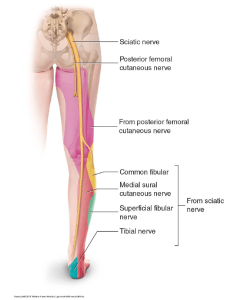
What Causes Sciatica?
One possible cause is nerve-root irritation associated with a disc problem in the lower back.
Changes to a spinal disc can sometimes irritate or compress a nearby nerve root. Other spinal conditions, including narrowing around the nerves and degenerative changes, can also contribute to nerve-root symptoms.
However, not every pain travelling down the leg is caused by a disc problem.
Muscles and other soft tissues around the hip and buttock can also produce symptoms that may feel similar to sciatica.
This is why assessment is important before deciding what treatment is appropriate.
Sciatica or Piriformis-Related Symptoms?
The piriformis is a muscle located deep within the buttock. Problems involving the piriformis and surrounding tissues can sometimes produce pain in the buttock and leg that resembles sciatic pain.
The symptoms can therefore be confusing.
Rather than automatically treating the painful area with massage, an appropriate assessment can help determine whether the presentation is more consistent with nerve-root irritation or a muscular/soft-tissue problem.
Sciatica Bathgate: Assessment and Treatment
When you attend Leading Edge Therapies with sciatic-type symptoms, we consider your clinical history, symptoms, movement and relevant orthopaedic tests.
Depending on your presentation, assessment may include:
- Slump test
- Straight Leg Raise (SLR)
- Valsalva manoeuvre
- Forced cough test
- Spinal and lower-limb movement assessment
- Neurological screening where appropriate
- Muscle and soft-tissue assessment
These tests don’t identify a particular disc or tell us exactly which structure is responsible.
Instead, when considered alongside your symptoms and clinical history, they can provide useful information about whether your presentation is consistent with nerve-root irritation or other neurological involvement.
If the findings are less consistent with nerve-root involvement and more suggestive of muscular or soft-tissue involvement, treatment can be directed accordingly.
What Happens If We Suspect a Disc or Nerve Problem?
If your assessment suggests that your symptoms may involve nerve-root irritation or a disc-related problem, this doesn’t automatically mean that hands-on treatment is inappropriate.
This is where our Orthopaedic Massage approach differs from a standard massage treatment.
The assessment findings help us determine how your symptoms are presenting and which techniques may be appropriate. Treatment can be adapted to avoid unnecessarily aggravating an irritated nerve while addressing the surrounding muscular tension, restricted movement and other contributing factors.
Depending on your presentation, treatment may include appropriate soft-tissue techniques, stretching and specific joint mobilisation protocols.
However, orthopaedic massage assessment cannot determine exactly which disc is involved or replace medical investigation. Where the presentation suggests that further investigation is warranted, we would recommend appropriate medical assessment and, where indicated, MRI or other investigations.
This means we can take two things into account at the same time:
1. Treat what we can appropriately treat through hands-on therapy.
2. Recognise when additional medical investigation or management is required.
The aim is not simply to treat the symptom, but to understand the likely source of the problem and provide an appropriate treatment approach.
Orthopaedic Massage for Sciatica
Once we’ve assessed your presentation, Orthopaedic Massage can be tailored to the findings.
Depending on the individual, this may include:
- Targeted soft-tissue techniques
- Myofascial techniques
- Trigger point techniques
- Stretching
- Specific joint mobilisation protocols
- Movement advice
Where nerve-root irritation is present, the treatment approach can be modified accordingly rather than simply applying deep pressure to the painful area.
Where the presentation is more consistent with muscular involvement, such as piriformis-related symptoms, treatment can be directed more specifically towards the relevant muscles and surrounding tissues.
When Sciatica Requires Urgent Medical Attention
Although many cases of sciatic-type pain can be assessed and managed appropriately, some symptoms require urgent medical attention. Changes to bladder or bowel control, numbness around the genitals or anus, or significant or worsening weakness can be warning signs of cauda equina syndrome.
If you experience these symptoms, seek urgent assessment at A&E rather than booking a massage appointment.
For further information about sciatica and when to seek medical help, see the NHS information about sciatica.